 +91 929292 8787
 Book My StayMenu
There is a version of Rishikesh nobody photographs. It happens between 4:45 and 6:00, before the first raft comes off a jeep roof

before the briefings, before the river becomes an activity. If you have only seen Tapovan at midday, you have met the town but not the river. Anyone who has stayed at a hotel in Rishikesh near the river during those hours will say the same thing. The Ganga does not roar at dawn. It hums.
The gap between 5:25 and 8:00 is why people return to Rishikesh instead of ticking it off a list.
By nine, Tapovan belongs to everyone. Groups gather near Laxman Jhula, cafes pull their shutters up, scooters find their rhythm. It is wonderful. It is also loud.
At five the order flips. The river becomes the loudest thing in the valley, and even then it stays gentle. What reaches you is not one sound but several, stacked and separate.
Our long-standing raft guide on the Shivpuri stretch reads the water differently before sunrise. It runs cold enough in January that the air feels sharper than the forecast promised.
Rafting here runs under UTDB licensing, and the river closes through peak monsoon, roughly late June to early September. The 5 AM hour is available all year.
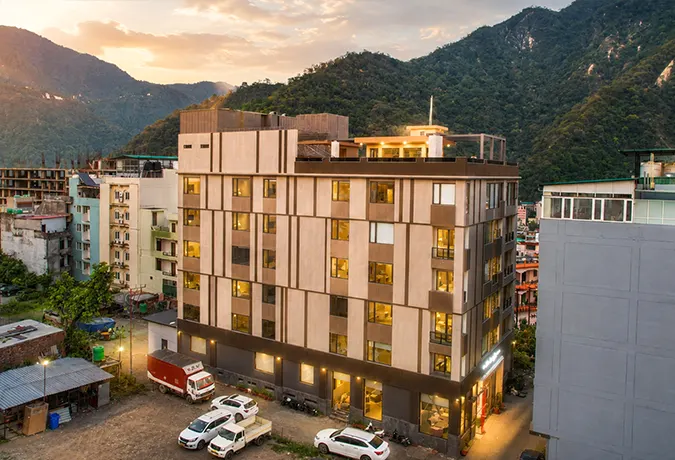
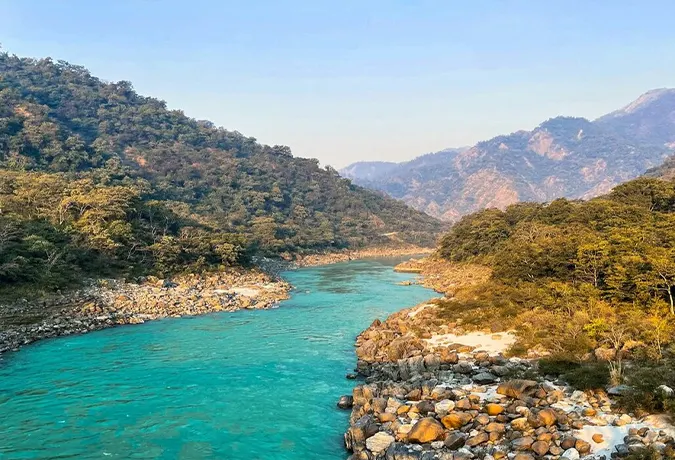
Tapovan is built on a slope. Properties higher up give you views but distance, turning the river into something visual rather than audible. A riverside property closer to the water gives you sound, temperature and access.
Neither is wrong. They produce different mornings.
If the pre-dawn Ganga is your reason for coming, proximity stops being a luxury feature and becomes the whole point. A checklist before you confirm anything:
Travellers comparing hotels near Tapovan Rishikesh filter by price first and location second. In Tapovan that order is backwards, because here the location is the amenity.
"You could not step twice into the same river." Heraclitus of Ephesus, preserved in Plato's Cratylus (c. 400 BCE).
The Ganga you hear at 5 AM and the one you raft at 8 AM are the same water and two separate rivers. Tapovan hands you both before lunch.
Anyone researching the best hotels in Tapovan Rishikesh should weigh three things above star ratings. Distance to water. Quality of morning quiet. And whether staff understand why someone wants tea at 5 AM. A property that treats early risers as an inconvenience will quietly undo the reason you came.
Comparing a hotel Tapovan resort Rishikesh against a cheaper guesthouse uphill, work out the cost per morning rather than per night. For most people who care about this hour, the maths settles it.
Rishikesh sells itself on rapids, fairly so. But rafting is the second best thing that happens here. The best thing happens three hours earlier, costs nothing, and asks only that you wake up and walk down.
If you want that morning effortless instead of logistical, stay where the water is a walk rather than a drive. Resort De Coracao sits a short walk from the Tapovan bank, close enough that the river becomes part of the room.
Planning October to March? Check availability early. Riverside rooms fill first, for exactly this reason.
Book the river, not just the room. The rapids will still be there at eight.
Riverside properties are noticeably quieter than road-facing ones. The current produces a steady band of white noise masking traffic and conversation, which is why most guests report sleeping deeper and waking naturally without an alarm.
October to March gives the clearest pre-dawn conditions, minimal haze and comfortable temperatures. Monsoon months bring dramatic water volume but reduced visibility, and riverbank access is restricted during heavy rainfall for obvious safety reasons.
Most established riverside properties coordinate directly with UTDB-licensed operators and arrange departures between 8 AM and 9 AM. Confirm while booking rather than on arrival, since availability tightens sharply across weekends, holidays and the December peak.
Most Tapovan properties sit within one to three kilometres of Laxman Jhula, working out to a fifteen to thirty minute walk. During morning and evening congestion, walking is genuinely faster than driving, so plan your movement accordingly
Tapovan is generally considered safe at that hour, with pilgrims, sadhus and shopkeepers already active along the main stretch. Stay on established paths, avoid wet rocks close to the current, and tell your property before heading out.
 +91 929292 8787
 reservation@resortdecoracao.com